
Upcoming Hearings
We will move into our next phase of hearings in the latter part of this year.
Phase 11 will focus on ‘Protecting children in care in Scotland
from abuse: present and future’.

Evidence Hub
Search the Evidence Hub for documents including Witness Statements, Transcripts of Hearings, Case Study Findings, and Reports by Care Providers.

Our recently published news items
The most recent case studies, videos, and articles relating to the ongoing work of the Inquiry.
You can search for older news items on our News page.
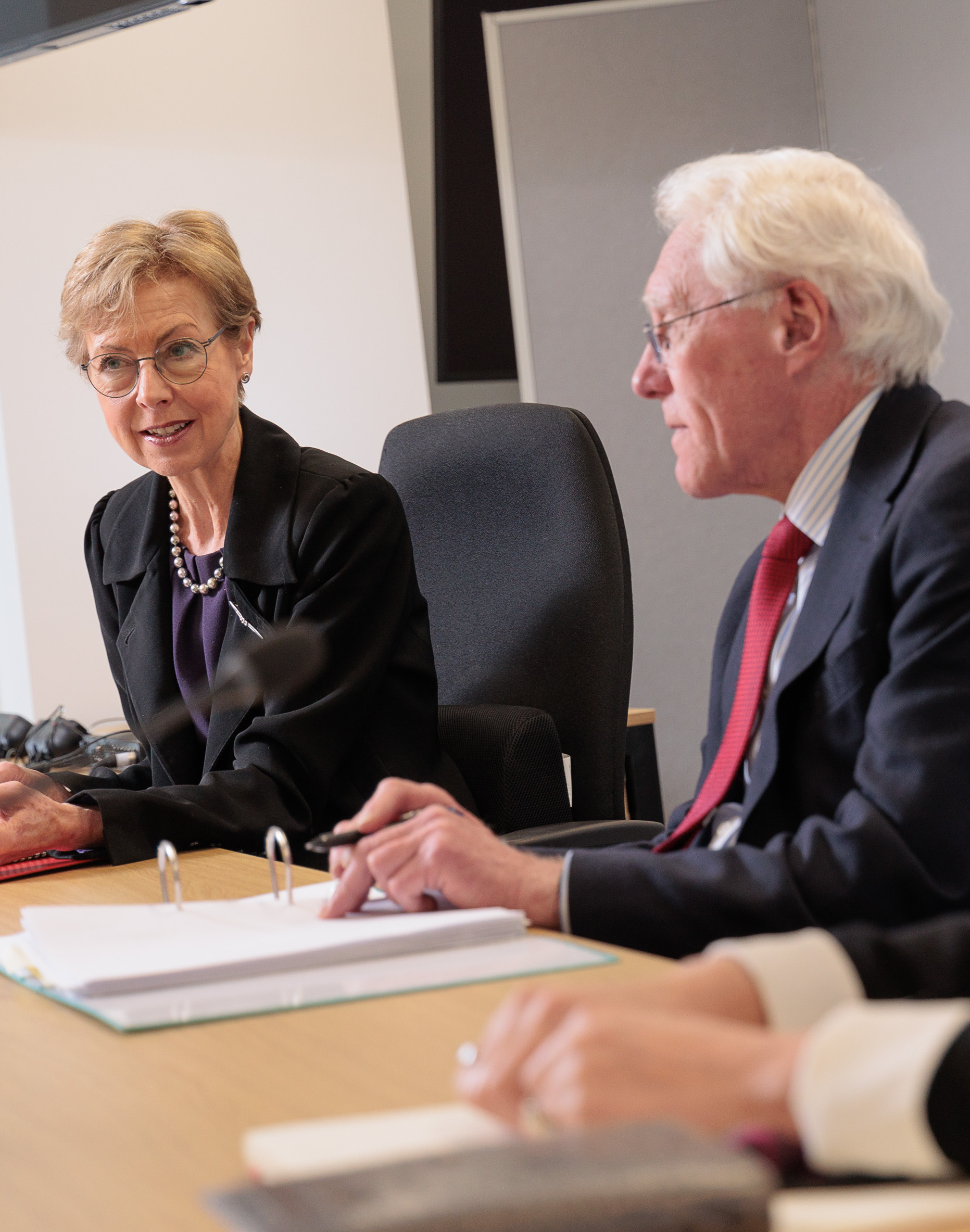
Phase 11 hearings to commence
On Tuesday 8 December, the Scottish Child Abuse Inquiry (SCAI) will begin its hearings in relation to Phase 11, which will focus on ’Protecting children in care in Scotland from abuse: present and future‘. Themes to be explored in Phase 11 hearings will include:
- the investigation and prosecution of complaints of abuse of children in care
- the abuse of children in care by other children
- the exploitation of children in care
- prevention of the abuse of children in care, present and future.
Regarding Phase 11, Inquiry Chair Lady Smith, said: ’Given the wide scope of our terms of reference, we will, throughout the whole of Phase 11, consider ongoing failures of state and non-state institutions to protect children in care from abuse and what further steps, reforms, or improvements are needed to strengthen that protection.
’We know from our evidence that the protection of children in care now and in the future is of the utmost importance to our applicants.’
The first chapter of the Phase 11 public hearings will be in relation to children who abuse other children and will explore:
- abuse between children in residential care settings
- the strategies, programmes, and approaches to prevent children in care abusing other children
- what further steps, reforms, or improvements are needed to prevent and strengthen protection of children in care from such abuse.
In this chapter, the Inquiry will hear from national agencies, third-sector organisations, residential childcare providers, academics, and clinical psychologists.
Lady Smith said: ’The Inquiry has already heard much evidence about children in all types of care settings having been abused sexually, physically, and emotionally by other children as well as by individuals responsible for their care.
’Such evidence has been presented in many of our case studies, and I have made numerous findings about it. In this chapter of Phase 11, I want to explore the important question of why it happens.’
No applicant evidence will be led in this first chapter of Phase 11. The list of participants for the December hearings will be available on the Inquiry’s website prior to the commencement of the hearings.
Applications for leave to appear are not being invited for this first chapter. Applications for leave to appear may be invited for subsequent chapters.
Members of the public can watch proceedings from the public gallery of the Inquiry’s hearing suite. They are welcome to do so at any time. Hearings will be held at the Inquiry’s venue at Mint House, 20 West Register Street, Edinburgh, EH2 2AA.
The Inquiry’s witness support team can be contacted on 0800 0929 300, or emailed at
talktous@childabuseinquiry.scot. Individuals can also write to the Inquiry by post at SCAI, PO Box 24202, Edinburgh EH3 1JN. British Sign Language (BSL) users can contact us direct through an online sign language interpreter at www.contactscotland-bsl.org.
Further details about future chapters in Phase 11 public hearings will be released in due course.
Scottish Child Abuse Inquiry renews call for evidence on grooming and exploitation of children in care
The Scottish Child Abuse Inquiry (SCAI) has renewed its call for anyone with evidence about children in care being groomed for exploitation to get in contact.
SCAI, which is investigating the abuse of children in care in Scotland, says it has already received evidence about children being groomed and exploited, however, it believes there may be others who do not realise that such evidence falls within its remit.
Lady Smith, Chair of the Inquiry, said: ‘Although we have already been provided with evidence about children in care being groomed for exploitation – some of this evidence having been provided by witnesses in our current case study hearings – I believe there may be more.
‘I am aware that some people may be uncertain as to whether we can gather and investigate such evidence. They may think that they cannot now provide their evidence to us, given the announcement of a new public inquiry which is, I understand, going to focus on the grooming of children and young people for exploitation.
‘I want to make it clear that they can provide evidence to us, and encourage them to do so. Evidence about children in care being groomed for exploitation is important to the work of this Inquiry.’
The Inquiry’s Terms of Reference require it to investigate the nature and extent of abuse of children while in care in Scotland, wherever the abuse took place.
Grooming for exploitation is a form of abuse where an individual or group of individuals attempts to persuade, manipulate, or force a child or young person to engage in sexual or other harmful activity. When groups are involved, they may sometimes be referred to as ‘grooming gangs’.
Children in care can be particularly vulnerable to exploitation.
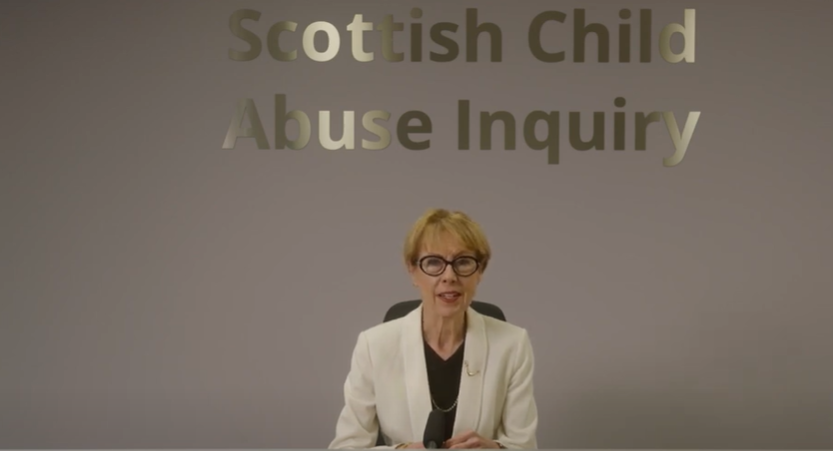
In a video appeal, of which a BSL version is also available, Lady Smith confirmed that where a child was in care at the time, grooming for exploitation falls within the Inquiry’s remit — regardless of where the abuse occurred.
She said: ‘Grooming children and young people for exploitation can involve grooming them for sexual activity or any other harmful activity, including criminal activities.
‘I want to make it clear that – so long as the child was in care – we can investigate the abuse even if the grooming or the exploitation, or both, took place outside the placement. Our Terms of Reference also cover foster care.’
SCAI can investigate allegations of abuse which happened before the end of December 2014. It can also investigate abuse that began before that date and continued after that date.
In addition, it can examine whether systems failed to protect children in care from exploitation at any time — including after December 2014 and up to the present day — in order to assess what changes may still be needed to better protect children in the future.
The Inquiry would like to hear from anyone who:
- was in care and wishes to share their experience of grooming or exploitation, whether it took place within or outside an institution, foster home, or other placement
- works or has worked with children in care and is aware of grooming or exploitation involving those children
- was not in care but has evidence about the exploitation of children who were in care.
Lady Smith added: ‘We know how difficult it can be to talk about the experiences of children in care — whether because you were a child in care or you want to talk about what happened to other children — and we want you to feel safe when you speak to us.
‘The Inquiry takes a trauma-informed approach to how we gather evidence and we have a Witness Support Team to support anyone who provides evidence to the Inquiry.
‘If you would like to talk about coming forward to provide evidence, or if you have any questions about the Inquiry, you can contact our Witness Support Team. Please get in touch, we want to hear from you.’
Anyone wishing to contact the SCAI’s Witness Support Team can do so:
- by telephone: Freephone 0800 0929 300
- by email: TalkToUs@childabuseinquiry.scot
- by post: PO BOX 24202, Edinburgh, EH3 1JN
- British Sign Language (BSL) users can contact us direct through an online sign language interpreter at www.contactscotland-bsl.org
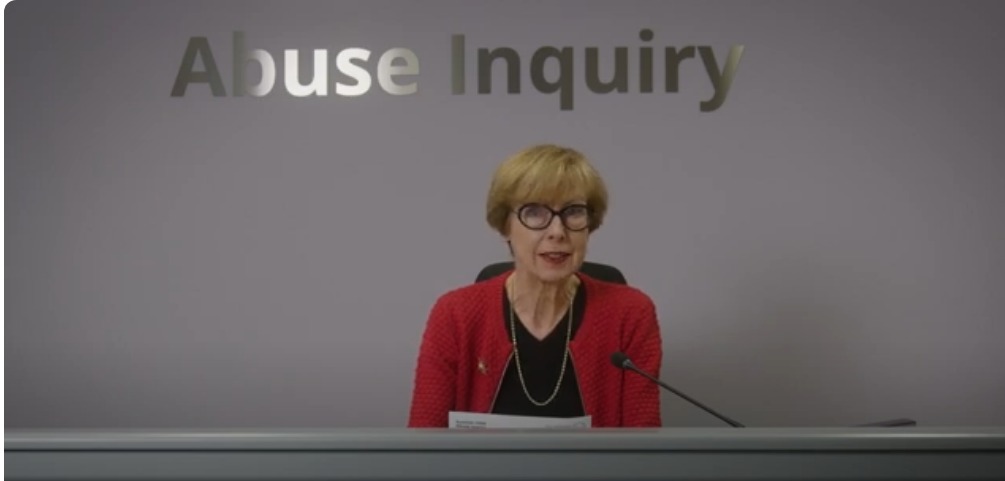
Child exploitation and failures of institutions to be included in Inquiry's next phase
Today, Thursday 18 June, the Scottish Child Abuse Inquiry (SCAI) will begin hearing closing submissions in relation to Phase 10 of its investigations. Phase 10 has been running since December last year and hearings will be completed by the end of this week.
The focus of the case study has been the provision of residential care for children and young people in establishments run by local authorities and establishments run by voluntary providers used by local authorities and others to place children in care.
Over the course of 46 days, evidence was heard relating to more than 200 witnesses and covered around 20 establishments. This included the evidence of 167 applicants.
Today, the Inquiry Chair, Lady Smith, will set out SCAI’s next phase.
Phase 11 relates to ‘Protecting children in care in Scotland from abuse: present and future’. It will begin in the latter part of this year and will focus in particular on paragraphs 6 and 7 of SCAI’s Terms of Reference. The Inquiry’s investigations will:
- consider the extent to which failures by state or non-state institutions to protect children in care in Scotland from abuse has been addressed by changes to practice, policy, or legislation; and
- consider whether any further changes in practice, policy, or legislation are necessary in order to protect children in care in Scotland from abuse in future.
Lady Smith said: ‘In responding to our Terms of Reference, we have ingathered a substantial body of evidence in relation to a wide range of residential care settings and I have made many findings as published in 16 separate volumes thus far.
‘My 17th volume of findings will be published later this year and further volumes are in preparation.
‘During Phase 11 there will be a focus on paragraphs 6 and 7 of our Terms of Reference which require us to investigate the failures of state and non-state institutions to protect children in care from abuse, whether those failures have been addressed, and whether further changes in practice, policy, or legislation are necessary.
‘The structure of Phase 11 hearings will also allow for some specific themes to be explored. For example, later this year we will consider ‘Why children abuse other children? ’.
‘We have already heard and presented much evidence about the abuse of children in care by other children in our case studies, and I have made numerous findings about it. I now want to explore the important question of why it happens.
‘Also, I recently made an announcement in relation to our work regarding the exploitation of children in care and we plan to include it in our presentation of Phase 11.
‘By exploitation, I mean a type of abuse in which a single person or groups of people persuade or force a child to engage in sexual or other activity. When groups of people do this, they may be referred to as ‘grooming gangs’.
‘So long as the exploited child was in care, we can investigate the abuse even if the grooming or the exploitation took place outside the placement or foster home.
‘We can investigate allegations of abuse which happened before the end of December 2014 and, to be clear, we can investigate abuse which began before and continued after that date.
‘We plan to focus on the exploitation of children in care in our Phase 11 hearings in the early part of 2027.
‘Other hearings in relation to specific topics will follow and details of them will be announced in due course.’
Hearings calendar
It is expected that the Inquiry’s Phase 11 hearings will begin in the latter part of 2026. Further details will be provided in due course.

Share your experience
If you want to share your experience, we can explain what’s involved and support you at every step. We have made a series of videos with BSL translations that explain how the Inquiry works.
Our progress
Some statistics from the Inquiry's investigations.

Pages of evidence analysed

Witness statements published

Days of hearings to date

BSL Scottish Child Abuse Inquiry self-care
Reading or hearing evidence can be distressing. We recognise the importance, in these circumstances, of keeping us all – applicants, witnesses, members of the public, legal representatives, and our own staff – safe from harm. We have therefore prepared this leaflet to let people know about the possible effects they may experience after reading or hearing evidence. A BSL version is also available.